


2024 in Review
As we enter a new year, we asked our Editorial Board to share their insights on the key takeaways from 2024 that will shape important developments in IP practice for 2025 and beyond.
The following overviews highlight significant developments in intellectual property law across various jurisdictions, showcasing the dynamic landscape of patents and trademarks:
Canada’s Patent Office plans new regulations for patent term extensions starting January 1, 2025, following a court ruling against generic companies. In China, digital intelligence is transforming trademark legal services, boosting efficiency for practitioners. The German Federal Court clarified that non-infringing activities can still lead to damages claims in patent infringement cases. The European Commission expressed concerns about the Munich court’s interpretation of SEP licensing negotiations, emphasizing balanced assessments regarding implementer behavior.
In India, the Delhi High Court sided with Pioneer Overseas Corporation in a plant variety infringement case, upholding breeders’ rights and the importance of scientific evidence. Japan is handling a case where a plaintiff alleges infringement of a breast augmentation patent, with the Intellectual Property High Court set to rule on its validity and the definition of “production.” The UK patent litigation market remained active in 2024, focusing on life sciences, technological advancements, and FRAND disputes, with significant rulings expected on mRNA patents and AI patentability.
Lastly, recent US Supreme Court decisions may limit the USPTO and Copyright Office’s rulemaking powers, leading to more judicial scrutiny and litigation challenges.
We would like to take this opportunity to thank our Editorial Board for their continued support and hard work throughout the year. Please visit page 6 to familiarize yourself with each member’s profile.
If you would like to learn more about our Editorial Board or apply for 2026, please visit www. patentlawyermagazine.com/editorial-board-applications/
A review from Germany
Dr. Claudia Tapia, Ericsson
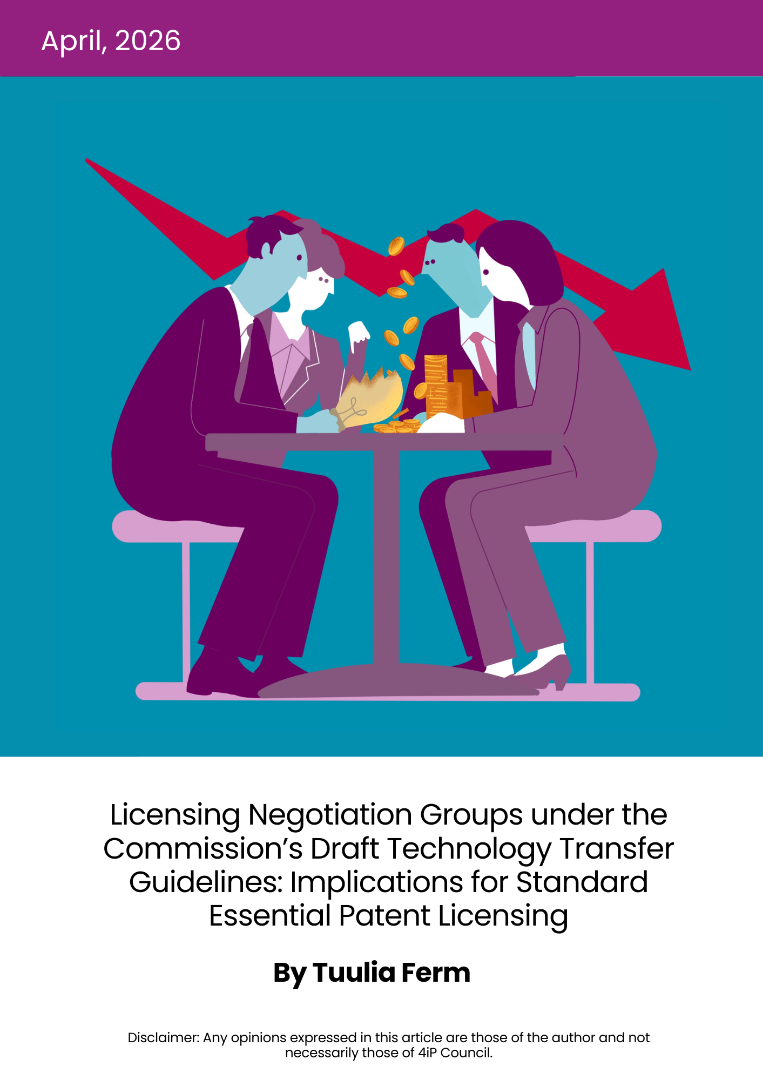
In Huawei v ZTEZ1, the CJEU established a framework for license negotiations of SEPs, available on FRAND terms. The European Commission (EC), in its recent Amicus Brief for HMD v. VoiceAge2, raised concerns that the Munich court may have misinterpreted this framework by overemphasizing the implementer’s conduct when deciding on whether to grant an injunction. The EC advocates for courts to evaluate the SEP user’s willingness to obtain a FRAND license3 based on their initial declaration, even if subsequent actions reflect bad faith.
If this interpretation were adopted, SEP owners could more frequently find themselves negotiating in a vacuum. They would have to make FRAND offers without vital information, typically shared under an NDA in good faith negotiations. This would undermine the CJEU framework, which is designed to foster good faith licensing negotiations. In light of this, the Munich court will probably continue issuing injunctions in clear instances of bad faith regardless of the implementer’s initial declaration – such as against implementers refusing to negotiate or delaying counteroffers for over a year. As the Bundesgerichtshof (Federal Court of Justice) noted in Sisvel v Haier, when bad faith behavior is established, the existence of a FRAND offer will typically not be decisive, as it does not impact the party deemed unwilling to negotiate.
As some implementers increasingly adopt sophisticated strategies to postpone negotiations and devalue FRAND, distinguishing between willingness and unwillingness becomes less straightforward. In these scenarios, courts are likely to consider the SEP owner’s FRAND offer to the necessary extent, alongside both parties’ overall conduct throughout negotiations. Such an approach would help courts determine if adjustments to the standard for assessing the implementer’s behavior are necessary while ensuring a balanced outcome.
Disclaimer: Dr. Claudia Tapia, LL.M is Head of Global IPR Policy Research & Academic Relations at Ericsson and President of 4iP Council. The views expressed in this article are those of the author alone and do not necessarily represent the views or positions of Ericsson, any of its affiliates, or any employee thereof, or the views or positions of 4iP Council or any of its supporters.
- 1 https://eur-lex.europa.eu/legal-content/en/ TXT/?uri=CELEX%3A62013CJ0170
- 2 https://competition-policy.ec.europa.eu/antitrust-and-cartels/ national-courts/amicus-curiae-observations_en
- 3 https://caselaw.4ipcouncil.com/guidance-national-courts