

Abstract:
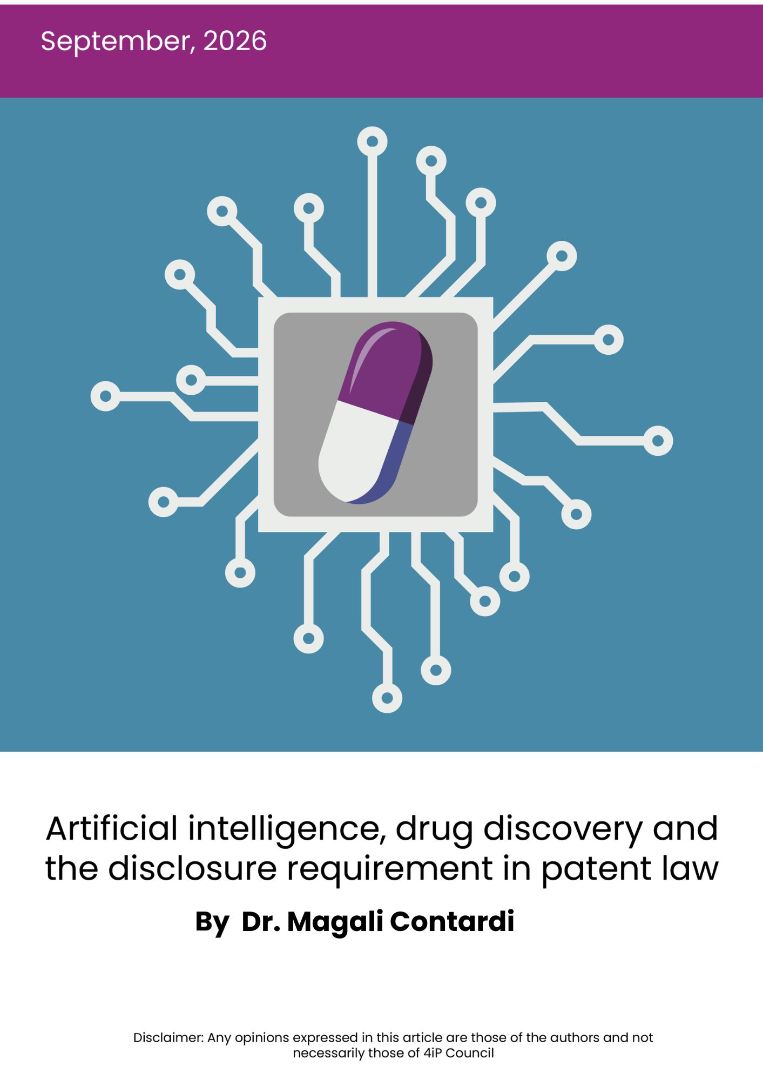
The transition from traditional to AI-driven drug discovery is transforming pharmaceutical research. Companies increasingly rely on machine learning and deep learning systems to accelerate the identification and optimisation of therapeutic candidates. This technological shift places renewed pressure on the legal framework governing patent disclosure. Under Article 83 EPC, the patent bargain requires applicants to disclose their inventions clearly and completely enough for a skilled person to reproduce them without undue burden. In the pharmaceutical sector, this has traditionally involved providing empirical evidence that a claimed compound plausibly achieves its therapeutic effect. However, AI-driven discovery often generates candidate molecules before any wet-lab validation exists, raising the question of whether in silico data alone can satisfy the sufficiency-of-disclosure requirement. A further challenge concerns whether applicants must disclose the AI models or training data used to generate such candidates. This article contributes to the emerging debate by re-examining sufficiency of disclosure for AI-driven drug inventions under European patent law. It pursues two objectives: first, to clarify how current disclosure standards are interpreted and applied to AI-driven pharmaceutical inventions; and second, to assess whether these standards remain fit for purpose in an era of increasingly data-driven and computational drug discovery. The article offers policy-oriented reflections on how European patent law can balance incentives for innovation with safeguards against overly broad or speculative claims. It concludes with a practical guidance for practitioners drafting and prosecuting patent applications in the field of AI-driven drug discovery.