

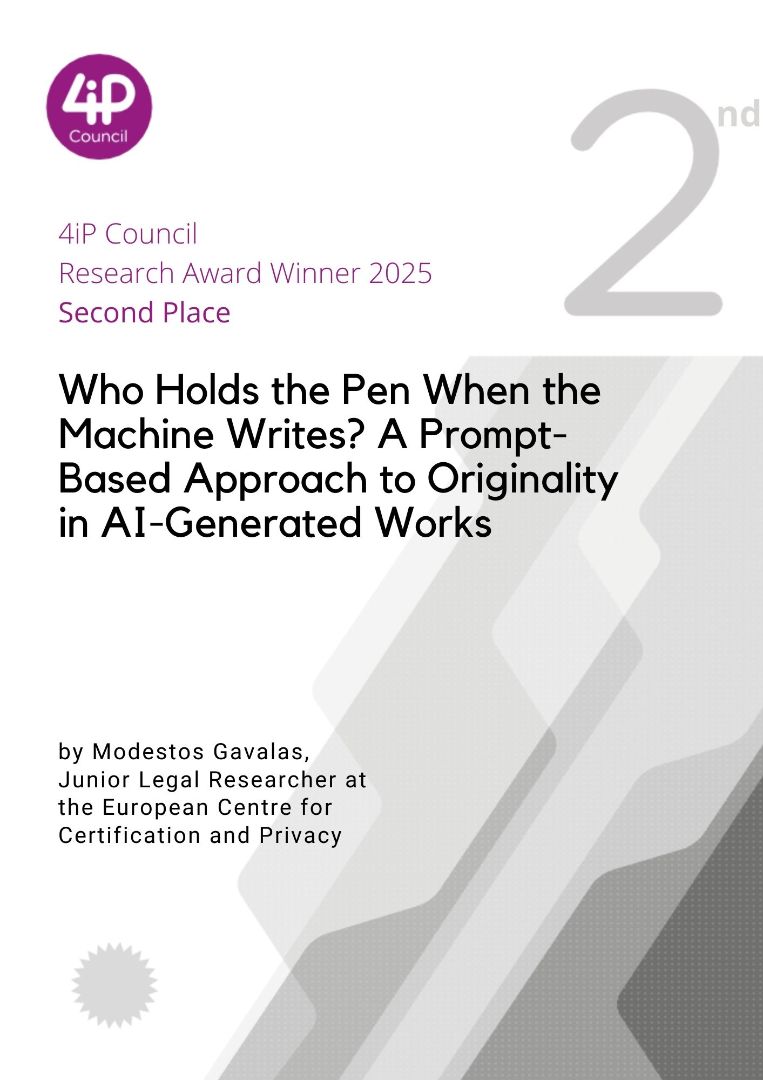
This research critically examines how the rapid integration of generative artificial intelligence into creative industries challenges the foundational copyright concepts of originality and authorship. Moving beyond abstract theorization, the paper adopts a comparative and empirically informed doctrinal methodology, analysing how existing copyright frameworks in the European Union, the United States, and the United Kingdom respond to AI-assisted and AI-generated works in practice.
From a comparative standpoint, the paper situates generative AI within the distinct yet converging copyright traditions of the European Union, the United States, and the United Kingdom. Rather than treating these systems as static, the analysis traces how each jurisdiction’s originality and authorship doctrines have evolved in response to technological disruption. By engaging with landmark judicial decisions and regulatory responses, the study reveals underlying tensions between formal legal standards and the practical realities of AI-assisted creativity, highlighting areas where doctrinal coherence is increasingly strained.
Complementing this comparative inquiry, the research adopts an empirically grounded lens, drawing on concrete examples from contemporary generative AI practices and emerging administrative and judicial disputes. By examining different modes of human and AI interaction across creative contexts, the paper explores how varying degrees of human involvement complicate traditional assumptions about creative control. This approach allows the analysis to remain closely connected to real- world applications, while leaving open critical questions about how existing legal frameworks may adapt to evolving creative processes.
The paper advances a novel doctrinal proposition: originality in AI-assisted works should be assessed not solely by examining the final output, but by evaluating the creative effort embedded in human inputs, particularly prompts, iterative refinements, and curatorial decisions. By shifting the analytical focus toward prompt-based creativity, the study reconciles technological realities with established copyright principles while maintaining legal certainty.
Finally, the research addresses emerging evidentiary challenges, including the difficulty of proving human authorship in AI-assisted creation. It explores practical mechanisms such as metadata analysis and prompt inversion techniques as potential tools for courts and rights holders. Overall, the paper contributes a nuanced, case-law driven framework for reassessing originality and authorship in the AI era, offering courts and policymakers a path that preserves human creativity without stifling technological innovation.